Ha! The Oscars were nearly a week ago, and now I'm posting my Best Picture article? Sadly, yes. I have to admit, this blog is grossly neglected, and has become a bit of a liability amid so many other paid and high-profile responsibilities. But it's important to keep my work at one central hub.
(Photo collage courtesy of SouthPhillyReview.com)
So, behold my Best Picture roundup at South Philly Review. How'd I do? CLICK HERE. And please be sure to check out the category-by-category predictions we did over at Slant's The House Next Door. What a fun undertaking. CLICK HERE.
Showing posts with label Best of. Show all posts
Saturday, March 3, 2012
Monday, January 9, 2012
'In the Land of Blood and Honey' Review
I already shared my interview piece on Angelina Jolie last month, but now I'm properly reviewing her film, "In the Land of Blood and Honey," which I was more keen on than most, and placed among my honorable mentions for 2011.
The review is now online at SouthPhillyReview.com. To read it, CLICK HERE.
Monday, January 2, 2012
For Your Consideration: An Ideal Oscar Slate
*This article was previously published in the January 2011 issue of ICON Magazine. It has been republished with permission.
The Oscars are coming! And though there will be plenty of terrific nominees, there are bound to be some who don't deserve to sit at the big kids' table (that means you, Glenn Close). The Oscars need an ideal ballot, packed with films and performances that truly packed a wallop. Herewith is that ballot, primed and ready for Academy consideration: (* indicates winner)
By R. Kurt Osenlund
BEST SUPPORTING ACTRESS
Jessica Chastain, The Debt
One certainly had his fair share of great Jessica Chastain performances to choose from this year, which could quite easily be dubbed The Year of Jessica Chastain. Can anyone remember another recent instance when a superb actor blew up so rapidly and so completely? In 2011, Chastain appeared in The Help, The Tree of Life, Coriolanus, Take Shelter, and The Debt, gracing each with a level of thespian artistry that left scads of filmgoers asking, “Who IS that girl?” While her bubbly contribution to The Help ranks a close second, Chastain's work in The Debt takes top placement, if only because the 30-year-old redhead so vividly outshines everything around her. Playing a spy who's after a Nazi war criminal, she's got beauty, instincts, and steely conviction to burn.
Viola Davis, The Help
Though being campaigned for lead actress, Viola Davis in fact turns in a supporting performance in The Help, and winds up supporting the whole film with her surprisingly nuanced dimension. Playing a maid whose scarred history prompts her to help a plucky white journo pen a book about maids' experiences, Davis deeply enriches the popular story with her believably world-weary face, giving her character a palpable past not so much with words, but expressions. It's the kind of insightful work that allowed this goes-down-easy movie to transcend accusations of backhanded racism.
*Charlotte Gainsbourg, Melancholia
Kirsten Dunst's fine turn in Lars von Trier's Melancholia may be the one netting all the good ink, but it's von Trier muse Charlotte Gainsbourg who truly rattles you to the bone. Playing the level-headed sister to Dunst's unstable depressive, Gainsbourg becomes the character who loses it most tragically as the world comes to an end, unforgettably crumbling into despair―as so many of us would. Down to the last blinding moment, she is searingly, devastatingly great, embodying an upstanding, “normal” woman who just cannot accept that it is, once and for all, time to go.
Carey Mulligan, Shame
Matching beat for beat Michael Fassbender's stunning performance as a sex addict, Carey Mulligan's work in Shame (as Fassbender's character's troubled, nomadic sister) introduces a whole new facet of her ever-rising star―a desperate, unglamorous side that presents a challenge for which the actress is very much game. Her heated and subtext-ridden encounters with her co-star are just as riveting as her much-discussed rendition of “New York, New York,” which she hauntingly croons in a strange, telling, and lingeringly gorgeous scene.
Shailene Woodley, The Descendants
Previously known only for the ABC Family schmaltz-fest The Secret Life of the American Teenager, 20-year-old Shailene Woodley breaks out in a big way in The Descendants, playing the oldest daughter of George Clooney's distraught dad in a matter that makes you feel as though you're interrupting an actual adolescent's very real life. It's not easy for a young actor to erase every ounce of truth-crippling self-consciousness, but Woodley does it, her work as a fiery 17-year-old as authentic in its bitchery as it is in its undeniable pain. The Descendants is a film oft-distinguished by characters' private anguish, and Woodley makes that anguish feel so private it seems to be the actress's own.
BEST SUPPORTING ACTOR
Albert Brooks, Drive
Not long ago, if anyone were to have speculated what Albert Brooks's next project would be, surely very few would have thought, “an eerily ruthless Hollywood gangster who nonchalantly bleeds people dry with straight razors and butcher knives.” But there you have it, and longtime awkward comedian Brooks is so suavely fantastic in his unnerving role that it may just be the one that comes to define his later career. Villains are always more effective (which is to say terrifying) when they exert their malice with very little effort, a sly technique to match their minimal human concern. Brooks makes good on his inspired casting (which is to say he's very, very bad).
Robert Forster, The Descendants
An underrated, underused actor who never disappoints, Robert Forster, like Shailene Woodley, plays a character in The Descendants who invites only the audience to share in his emotional hurt, and Forster makes that pain terribly real and intimate. As the largely unlikable father of George Clooney's character's comatose wife, Forster is tasked to make curmudgeonly ignorance endearing, and he more than leaps the hurdle, bringing pathos to a man whose outwardly strong, but inwardly dying right along with his unrevivable daughter.
Bruce Greenwood, Meek's Cutoff
Largely hidden behind a mess of a beard and beneath a shadow-casting cowboy hat, Bruce Greenwood doesn't have much room to make an impression as the titular, tunnel-visioned tour guide of Kelly Reichardt's Meek's Cutoff. So it's something of a small miracle that he's able to put forth such an indelible performance, shaping a striking figure of small-minded bigotry whose role in this volumes-speaking American saga keenly implies so many of his ilk, who are making pivotal, misguided decisions to this very day.
*Rhys Ifans, Anonymous
Another funnyman given the chance to don a dramatic persona, Notting Hill star Rhys Ifans is superb in the deliciously overcooked, history-challenging costume drama Anonymous, which begs the question, “Was Shakespeare a fraud?” (call it a “Shakespiracy”). If indeed he was, the film purports that Ifans's urbane duke was the real man behind the masterpieces, a cheeky, brilliant, and privately tormented aristocrat who handed off his work to a simpleton who hoarded all the credit. While it's not a leading role, Ifans proves immensely capable of carrying a film, bringing a kind of metrosexual sophistication to an individual of inherent interest. The film is silly, but he's seriously first-rate.
Viggo Mortensen, A Dangerous Method
For director David Cronenberg, Viggo Mortensen has played a killer without a past (A History of Violence) and a fearsome Russian gangster (Eastern Promises). In Cronenberg's A Dangerous Method, he takes on Sigmund Freud, of all people, and instills in the psychology godfather a sense of dry humor nearly as strong as his sense of personal motivations. Never better at disappearing into a character, Mortensen gives what could deservedly be called the definitive Freud performance. He owns every seasoned observation, every contemplative puff of that omnipresent cigar.
BEST ACTRESS
Juliette Binoche, Certified Copy
Abbas Kiarostami's Certified Copy is likely the year's most beguiling enigma, a stroll-on-the-street, Tuscany-set tale featuring two people who one assumes to be strangers until they evolve to seem as though they've been a couple for years. A good deal of the film's mystery is emitted from Juliette Binoche's incredible face, which is often looking directly at the camera as it shifts through a plethora of emotions (not to mention multiple languages). Becoming deeply enveloped in poignant exchanges with this man, whose rapport with her may just be an elaborate bit of playacting, Binoche's character feels strikingly genuine, and the actress lets you happily take part in the illusion.
*Olivia Colman, Tyrannosaur
The most revelatory performance of 2011 came from comedienne (!) Olivia Colman, whose wrenching turn as a religious shopkeeper in Paddy Considine's Tyrannosaur would be gobbling up awards if more people actually saw the film. Both heartbreakingly fragile and secretly capable of fierce self-defense (a fact whose unveiling just about sends your jaw to the floor), Colman's character gradually takes center stage in a movie ostensibly about a man, and to say the actress steals the show doesn't even scratch the surface of her impact. Playing the perpetually bruised slave of an abusive husband, her desperate, climactic breakdown is the year's single greatest actorly moment.
Yoon Jeong-hee, Poetry
In Poetry, a 66-year-old woman takes control of her life at a point when most would lose it: the moment she's diagnosed with Alzheimer's disease. Gracefully and beautifully, she begins to champion the values of vitality and justice, and Yoon Jeong-hee, in her first role since 1994, very quietly steals your heart away in her empathetic, understated approach to the character. As a part of a class in which she tries to challenge herself creatively, poetry becomes the woman's tool to access the depths of feeling she'd previous left uncultivated, and it only makes sense that Jeong-hee's work is highly poetic, too.
Meryl Streep, The Iron Lady
With her work in The Iron Lady, one of many films this year to be little more than a vessel for a powerhouse performance (see below), Meryl Streep all but grabs you by the shirt collar and pulls you at the screen. As Margaret Thatcher, the Oscar queen unleashes the fury and the sensitivity, too, fearlessly conveying what's made so many regard Thatcher as an irredeemable monster, and just as grippingly endowing her with admirable strength of character. What lingers is Streep's capacity of convincing you of just about anything, a skill that reflects the scary breadth of not just one unflagging woman, but conservative politicians at large.
Michelle Williams, My Week with Marilyn
That irresistible shimmy. That infectious, familiar giggle. Those little-girl-lost eyes. Few things induced more movie bliss this year than Michelle Williams's interpretation of Marilyn Monroe, a performance that creates as much a sense of discovery as it does nostalgia. Playing three versions of the same woman (private, downward-spiral Marilyn; public sexpot Marilyn; struggling-actor Marilyn performing in The Prince and the Showgirl), Williams uses her unendingly exciting talents to build an entire complex persona, who may be one of the most famous movie stars in history, but, thanks to one of the current best, is rendered only human.
BEST ACTOR
*Michael Fassbender, Shame
What Michael Fassbender brings to Shame certainly isn't on the page. He injects his sex addict with an astounding supply of brewing disgust, insatiable desire, repressed rage, and crushing, accumulating despair. Where did it all come from? It's amazing to watch if just for how completely it carries the material onto another lofty plane, a plane somewhere out in actor-lovers' heaven. The work is gaining press for Fassbender's ample full-frontal nudity, but that's hardly where the courage of this performance lies. It's the actor's willingness to take a swan dive into every last ugly trait of an addict that leaves you feeling spent.
Hamish Linklater, The Future
Certainly the least talked-about performance on this list, Hamish Linklater's work in Miranda July's The Future is nonetheless exemplary, an affectingly intuitive expression of July's unique writing, and a true, yet idiosyncratic, take on thirtysomething uncertainty. One half of a couple who, in choosing to adopt a cat, proceed to face every fear they've ever had of turning the page, Linklater's good-natured character becomes a suitable avatar for any man even close to his age, and his arduous tog of war with the moon (yes, the moon) is one of the great struggles of 2011 cinema.
Gary Oldman, Tinker Tailor Soldier Spy
In tackling the iconic role of super-sleuth George Smiley, Gary Oldman wisely chose to play it extraordinarily cool, and in doing so has crafted one of the very best performances of his lengthy career. Through long stretches of Tinker Tailor Soldier Spy, the grayed, bespectacled actor does not speak, merely hovering around each scene like a well-dressed watchdog. But when he does offer dialogue, you most surely listen, to that singular accent, that rich articulation, and that thrilling commitment to character that's always been present in his work. At least two of Oldmans's scenes boast bits of the year's most unforgettable acting greatness, one of which sees him peer right out at you in an unbroken, unshakable monologue.
Brad Pitt, Moneyball
Brad Pitt has never been better than he is in Moneyball, and that's no hyperbole. As one of the great heartthrobs of our time, Pitt, like many such stars, has had to struggle to ditch the pretty-boy image and dig into a character's skin. With visible wrinkles and a near-complete dismissal of vanity, he finally clinches his goal as Oakland A's coach Billy Beane, a man whose skin he wears so comfortably, one can't help but smile at the effortless transformation. That said, this is far from just a skin-deep portrayal, as Pitt taps directly into what makes this man tick―his demons, his hopes, his drive, and most importantly, his flaws.
Michael Shannon, Take Shelter
There is perhaps no other working actor better at playing mentally-plagued characters than Michael Shannon, who tops a list of lauded turns in films like Bug and Revolutionary Road with his work in Take Shelter, an ambiguously apocalyptic drama that casts him as a man whose biblical-plague visions begin to dismantle his life. Never do Shannon's tactics of portraying the unhinged feel put-on; he's always able to muster something creepily believable, and here, he pairs it with the relevant anguish of a man whose all-too-familiar paranoia about what's coming feeds a vicious cycle that threatens his livelihood. He's the mentally frayed poster boy of the new American nightmare.
BEST DIRECTOR
Tomas Alfredson, Tinker Tailor Soldier Spy
Nearly everyone will walk out of Tinker Tailor Soldier Spy at least a little perplexed, as the film offers no handrail with which to guide you through its cryptic, twisty, cloak-and-dagger plot. But surely no one will be unclear about the film's absolutely impeccable craftsmanship, which favors muted colors, gorgeous compositions, and perfectly mounted sequences that occasionally culminate with throat-grabbing visual zingers (Alfredson also helmed the Swedish dazzler Let the Right One In). It's practically impossible to imagine someone offering a finer visualization of John le Carré's classic novel, as this one is a model of old-school style, editorial panache, smart suspense and cool restraint.
Michel Hazanavicius, The Artist
Kudos to Michel Hazanavicius for valiantly pushing forward with his infectious beaut of a film, The Artist, which was most certainly met with a red light from multiple studios. His silent, black-and-white Hollywood homage is as much a current commentary as it is a romantic throwback, taking on the subject of technology's merciless march in about as dreamy a way as one could imagine. The film unfolds delightfully, gaining momentum and universal appeal with each new charming sequence, and the humor is in perfect step with the knowing drama, which finds gravity in both intimacy and relevance. However transparently a crowd-pleaser, The Artist is highly unique―and utterly lovable.
Miranda July, The Future
No one working in film today has a vision for quirk like Miranda July, whose weird ways are always tied to a very real emotion, rather than a cheap attempt at random, look-at-me coolness. With The Future, a clearly personal project that serves as the natural follow-up to her inimitable debut, Me and You and Everyone We Know, July contemplates the mid-30s plight of...nearing 40, and in effect constructs a highly individual, yet very universal, tale that explores the resonant fear of what's to come and the meaning of strong relationships. In a way, it's an art-installation version of The Big Chill, warmed up for the young and modern culturati.
Nicolas Winding Refn, Drive
No filmmaker this year showed more complete, down-to-the-last detail control of his production than Nicolas Winding Refn, whose crazy-tacky-cool thriller Drive has its director's signature on everything, right down to the hotel wallpaper. The setpieces, camerawork, editing, pacing, polish, sound, and tone of this film are all immaculate, a feast of style that more than makes up for the film's decided lack of substance (its relative hollowness is part of the point). This movie is catnip for formalists, and it should be added to the required-viewing pile for up-and-coming filmmakers.
*Lars von Trier, Melancholia
No one can grip and shake a viewer the way Lars von Trier can. Regardless of what he feeds to the media in his second role as provocateur, the Danish master serves up art films with more shattering visceral power than many helmsmen can muster in a whole career. With his masterpiece Melancholia, von Trier channels his much-ballyhooed depression into a soul-scouring meditation on the end of the world, which, as a process as steadily invasive as personal melancholy, is rendered with spectacular, fall-to-your-knees awe. His worldview may not be the sunniest, but his ability to scan and exploit the dark corners of man's condition make him an unexpected humanist.
BEST PICTURE
The Artist
A silent valentine to cinema that's hilarious and romantic, and doubles as an industry barometer.
The Descendants
A wonderfully intimate look at family and grief that boasts one of the year's best scripts.
Drive
A small masterpiece of craft that features a modern-day hero hidden beneath a shield of apathy.
The Future
An artful meditation on young aging, monogamy, success, existentialism, romance and cats.
Meek's Cutoff
A stark and brilliant western whose expansive canvas holds unspoken insights on race, gender, politics, maybe even the whole of American history.
*Melancholia
The jewel in a year apocalyptic tales, which almost convinces you that, sometimes, when things spin so far out of control, it's better to just wipe the slate clean.
Poetry
A heartbreaking tale of taking control of one's destiny at any age, and finding artistic inspiration in doing what's right―for oneself and others.
A Separation
An astonishingly tight tale of inflammatory relationships, whose micro focus holds great macro implications, depicting the massive ripple effect of poor choices and the dehumanization of societal rules.
Take Shelter
As potent a socio-economic allegory as any in recent memory, the film thrives on both ambiguity and plainspoken drama, centering on a man living in a world where nothing, and everything, is wrong.
Tinker Tailor Soldier Spy
A beautifully made spy thriller if ever there was one, and the cleverest of two in-vogue subgenres: the corporate thriller and the home-invasion nail-biter.
***
To check out last year's picks, CLICK HERE.
Thursday, December 29, 2011
The Best Movies of 2011
And so, it all comes down to this. I was thrilled with the variety and scope of my 2011 moviegoing, and I hope this list reflects that. Among the gems and masterpieces the past year had to offer is "A Separation," seen below.
To find out where this and the rest of my favorite films landed on my 2011 Top Ten List, now online at SouthPhillyReview.com, CLICK HERE.
Labels:
a separation,
Best of,
best of 2011,
Features,
foreign,
lists,
south philly review,
top 10,
year in review
Tuesday, December 27, 2011
The Best and Worst Movie Posters of 2011
For The House Next Door, the official blog of Slant Magazine, I compiled lists of The Best and Worst Movie Posters of 2011, the year-end culmination of my weekly Poster Lab column.
Click on and check out where your favorite and most reviled poster designs landed.
For The Worst Posters of the Year, CLICK HERE.
For The Best Posters of the Year, CLICK HERE.
Click on and check out where your favorite and most reviled poster designs landed.
For The Worst Posters of the Year, CLICK HERE.
For The Best Posters of the Year, CLICK HERE.
Wednesday, December 21, 2011
Angelina Jolie Feature
Two weeks ago, I had the great and unique pleasure of attending a press conference for Angelina Jolie's terrific debut feature, "In the Land of Blood and Honey." Ms. Jolie was present. I sat mere feet away from her. I spoke to her. She responded, and looked into my eyes.
Seriously, as much as I love the opportunities I get to meet with famous folks I admire, and as surreal as it may be at times, I'm not the starstruck type. I enjoy approaching interviews in a way that's both casual and very much about the work at hand. But this was...well, my heart was beating big time when it came time for to ask a question. (It's Angelina, dude.) I'm proud to say she answered the question well.
My article on the experience is now online at Slant Magazine. CLICK HERE.
Seriously, as much as I love the opportunities I get to meet with famous folks I admire, and as surreal as it may be at times, I'm not the starstruck type. I enjoy approaching interviews in a way that's both casual and very much about the work at hand. But this was...well, my heart was beating big time when it came time for to ask a question. (It's Angelina, dude.) I'm proud to say she answered the question well.
My article on the experience is now online at Slant Magazine. CLICK HERE.
Tuesday, December 20, 2011
'The Artist' Review
I have a screener for this black and white beauty sitting in front of my TV, and if there's anything I'm looking forward to post-holiday, it's popping it in to revisit the glee I felt at this year's New York Film Festival. "The Artist" is all kinds of lovely, and since no films that top it on my Best of 2011 list have a prayer, I'm all for it claiming the Best Picture Oscar.
Read my full review of "The Artist," now online at SouthPhillyReview.com. CLICK HERE.
Friday, December 2, 2011
'Hugo' Review
I was really taken with, and blindsided by, Martin Scorsese's "Hugo," a supposed kids movie that winds up a cinephile's valentine. It really grows on you, which is not to say it isn't totally magical in the moment, too.
Read my review of "Hugo," now online at SouthPhillyReview.com. CLICK HERE.
Saturday, November 19, 2011
'The Descendants' Review
Yes, I'm on the bandwagon. Clooney joins Payne for one of the best films of 2011.
Read my review of "The Descendants," now online at SouthPhillyReview.com. CLICK HERE.
Thursday, November 3, 2011
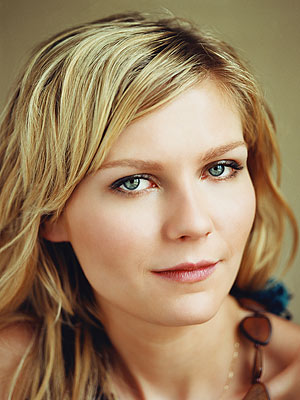
Kirsten Dunst Interview
This article was previously published in the November 2011 issue of ICON Magazine. It has been republished with permission.
The Upside of Apocalypse
In the new Lars von Trier film Melancholia, Kirsten Dunst plays a deeply depressed bride who welcomes the destruction of the planet. But in Dunst's own world, things have never been better.
By R. Kurt Osenlund
BETWEEN SMALL SIPS OF GRAPEFRUIT juice, Kirsten Dunst keeps giggling. It's morning at the Crosby Street Hotel in SoHo, and the 29-year-old actress, who's been lending her smirky, all-American looks to movies since the age of seven, is still reeling from the night before, when she and True Blood hunk Alexander Skarsgård, her onscreen fiancé in the new Lars von Trier mind-rattler Melancholia, finally blew off some steam amidst a nonstop press tour for the film.
“We celebrated,” Dunst says, her playful laugh and expression making it especially hard to believe that 17 years have passed since she played the youngest March sister in Little Women. “It was the first time we had a chance to celebrate.”
She may not have much time for it, but Dunst – or “Kiki,” to her fans – certainly has cause for celebration these days. In addition to winning her the Best Actress award at this year's Cannes Film Festival, her performance in Melancholia is earning her the greatest praise of her career and putting her on the short list of contenders for this year's lead actress Oscar. In the movie, which makes no bones about its ending (the world is spectacularly, unapologetically obliterated), Dunst plays Justine, a deeply depressed bride who strains to feign happiness at the start of the film, and whose name, one can only assume, is a nod to the Marquis de Sade's doomed and tortured rebel heroine.
Such is perfectly appropriate, considering that von Trier has gained a reputation for casting actresses in roles of near-sadistic turmoil, from Emily Watson in Breaking the Waves to Charlotte Gainsbourg in 2009's Antichrist. In Melancholia, Gainsbourg stars opposite Dunst as Justine's relatively level-headed sister, Claire. The two actresses chatted about their director while doing the rounds at Cannes (where, two years ago, Gainsbourg also picked up a Best Actress prize for serving as von Trier's muse), and Dunst says she initially sought advice from her Spider Man-3 co-star Bryce Dallas Howard, who in 2005 got in front of von Trier's camera for Manderlay. To the certain disappointment of sensationalist rags, the consensus seems to be that working for von Trier is by no means torturous, but rather liberating and, by all evidence, rewarding.
“I was completely drawn in by Lars,” Dunst says. “I really love his films. I'm always drawn to directors first, and he's one of the great auteurs of our time. He's also one of the only ones writing roles like this for women. It's just an opportunity that doesn't come along very often for anyone.”
Dunst would know. After more than two successful decades in the business, she certainly doesn't have much reason to complain, but like most American actresses, highs like Spider-Man and Marie Antoinette and Eternal Sunshine of the Spotless Mind are punctuated by lows like Elizabethtown and The Crow: Salvation and How to Lose Friends and Alienate People. She's right: there just isn't a flood of compelling roles out there. But Melancholia presents a meaty and challenging one, requiring the conviction to handle a mercurial rollercoaster that includes chirpy denial, profound discomfort, debilitating sadness, eerie aloofness, nudity, sex, and grace under the ultimate pressure— impending annihilation.
It's no secret that von Trier has been battling his own depression, and that it's manifested in his work, from the crushingly troublesome mood evoked by Antichrist to the titular destructive planet in Melancholia, which, as it heads inexorably toward our comparatively puny orb, represents Justine's heavy, ever-encroaching blues. Through the course of the movie, which is quite deliberately split in two, Dunst is tasked with convincing you of Justine's emotional shift, from an ill-behaving and nearly catatonic bride (she systematically ruins her wedding before descending into a state in which she can't eat or bathe) to a woman who finds a strange comfort in imminent doom, holding it together while everyone and everything around her falls apart.
“We talked about it, Lars and I,” Dunst says of Justine's curious arc. “We talked about how, sometimes, when people are depressed, the most horrendous things make them kind of step up to take care of everyone more than anyone else. There could be a lot of reasons for it, but it seems that, when you're in a depressed state, having something really bad happen gives you a kind of life again.”
She doesn't speak much about it, but Dunst suffered from a depression of her own in 2008, shortly after the Spider-Man trilogy closed on a sour note and shortly before Hollywood saw the first year-long drought of Dunst releases since 1992. Reportedly claiming to have felt abysmal for roughly six months beforehand, Dunst checked herself into a Utah facility for treatment. Upon completion, she went on to star in All Good Things, a fact-based New York thriller that, prior to Melancholia, earned her “best ever” raves. Call it the Von Trier Syndrome – depression leading to creative awakening. Her experience certainly informed the way she approached Justine, and her full emergence from it, she says, made tackling the role possible.
“I feel like, to play somebody like this, you have to be in a really good place,” she says, “because you can't play depressed when you're depressed—you can't do anything. There are many who know what that feels like. I think most people have gone through their own version of depression. It's a very normal thing.”
“Normal,” however, isn't the way anyone is going to describe the experience of Melancholia, an extravagantly visceral titan of a movie that, like most all of von Trier's work, is unshakable to the extent that you might want to clear your post-screening schedule. Regardless of how one feels about the apocalypse (whether you'd greet it with an atheistic calm like Justine, or a terrifyingly frantic desperation like Claire), von Trier uses his singular intuition and formidable visual and aural skills to dig right under the skin, penetrating your surface as he presents the smashing of the Earth's crust.
Dunst proves instrumental in her director's artistic goals, nailing that challenge of embodying an antiheroine whose inner life defies typical development. The true strangeness of it all is that, in discussing the role, Dunst never gets more than a touch serious, maintaining a steady levity that comes as a bit of a shock given the character and material in question. Something suggests that out of the actress's emotional lows has emerged an invigorated, and yet, selectively objective, artist, one who knows when to keep seriousness at arm's length and when to her hurl herself headlong into demanding, provocative work. Which, thankfully, seems to be a new habit.
“Whatever this film would have been – a fun experience, a weird experience, whatever – I was ready to do it,” she says. “I'm up for an adventure.”
***
The Upside of Apocalypse
In the new Lars von Trier film Melancholia, Kirsten Dunst plays a deeply depressed bride who welcomes the destruction of the planet. But in Dunst's own world, things have never been better.
By R. Kurt Osenlund
BETWEEN SMALL SIPS OF GRAPEFRUIT juice, Kirsten Dunst keeps giggling. It's morning at the Crosby Street Hotel in SoHo, and the 29-year-old actress, who's been lending her smirky, all-American looks to movies since the age of seven, is still reeling from the night before, when she and True Blood hunk Alexander Skarsgård, her onscreen fiancé in the new Lars von Trier mind-rattler Melancholia, finally blew off some steam amidst a nonstop press tour for the film.
“We celebrated,” Dunst says, her playful laugh and expression making it especially hard to believe that 17 years have passed since she played the youngest March sister in Little Women. “It was the first time we had a chance to celebrate.”
She may not have much time for it, but Dunst – or “Kiki,” to her fans – certainly has cause for celebration these days. In addition to winning her the Best Actress award at this year's Cannes Film Festival, her performance in Melancholia is earning her the greatest praise of her career and putting her on the short list of contenders for this year's lead actress Oscar. In the movie, which makes no bones about its ending (the world is spectacularly, unapologetically obliterated), Dunst plays Justine, a deeply depressed bride who strains to feign happiness at the start of the film, and whose name, one can only assume, is a nod to the Marquis de Sade's doomed and tortured rebel heroine.
Such is perfectly appropriate, considering that von Trier has gained a reputation for casting actresses in roles of near-sadistic turmoil, from Emily Watson in Breaking the Waves to Charlotte Gainsbourg in 2009's Antichrist. In Melancholia, Gainsbourg stars opposite Dunst as Justine's relatively level-headed sister, Claire. The two actresses chatted about their director while doing the rounds at Cannes (where, two years ago, Gainsbourg also picked up a Best Actress prize for serving as von Trier's muse), and Dunst says she initially sought advice from her Spider Man-3 co-star Bryce Dallas Howard, who in 2005 got in front of von Trier's camera for Manderlay. To the certain disappointment of sensationalist rags, the consensus seems to be that working for von Trier is by no means torturous, but rather liberating and, by all evidence, rewarding.
“I was completely drawn in by Lars,” Dunst says. “I really love his films. I'm always drawn to directors first, and he's one of the great auteurs of our time. He's also one of the only ones writing roles like this for women. It's just an opportunity that doesn't come along very often for anyone.”
Dunst would know. After more than two successful decades in the business, she certainly doesn't have much reason to complain, but like most American actresses, highs like Spider-Man and Marie Antoinette and Eternal Sunshine of the Spotless Mind are punctuated by lows like Elizabethtown and The Crow: Salvation and How to Lose Friends and Alienate People. She's right: there just isn't a flood of compelling roles out there. But Melancholia presents a meaty and challenging one, requiring the conviction to handle a mercurial rollercoaster that includes chirpy denial, profound discomfort, debilitating sadness, eerie aloofness, nudity, sex, and grace under the ultimate pressure— impending annihilation.
It's no secret that von Trier has been battling his own depression, and that it's manifested in his work, from the crushingly troublesome mood evoked by Antichrist to the titular destructive planet in Melancholia, which, as it heads inexorably toward our comparatively puny orb, represents Justine's heavy, ever-encroaching blues. Through the course of the movie, which is quite deliberately split in two, Dunst is tasked with convincing you of Justine's emotional shift, from an ill-behaving and nearly catatonic bride (she systematically ruins her wedding before descending into a state in which she can't eat or bathe) to a woman who finds a strange comfort in imminent doom, holding it together while everyone and everything around her falls apart.
“We talked about it, Lars and I,” Dunst says of Justine's curious arc. “We talked about how, sometimes, when people are depressed, the most horrendous things make them kind of step up to take care of everyone more than anyone else. There could be a lot of reasons for it, but it seems that, when you're in a depressed state, having something really bad happen gives you a kind of life again.”
She doesn't speak much about it, but Dunst suffered from a depression of her own in 2008, shortly after the Spider-Man trilogy closed on a sour note and shortly before Hollywood saw the first year-long drought of Dunst releases since 1992. Reportedly claiming to have felt abysmal for roughly six months beforehand, Dunst checked herself into a Utah facility for treatment. Upon completion, she went on to star in All Good Things, a fact-based New York thriller that, prior to Melancholia, earned her “best ever” raves. Call it the Von Trier Syndrome – depression leading to creative awakening. Her experience certainly informed the way she approached Justine, and her full emergence from it, she says, made tackling the role possible.
“I feel like, to play somebody like this, you have to be in a really good place,” she says, “because you can't play depressed when you're depressed—you can't do anything. There are many who know what that feels like. I think most people have gone through their own version of depression. It's a very normal thing.”
“Normal,” however, isn't the way anyone is going to describe the experience of Melancholia, an extravagantly visceral titan of a movie that, like most all of von Trier's work, is unshakable to the extent that you might want to clear your post-screening schedule. Regardless of how one feels about the apocalypse (whether you'd greet it with an atheistic calm like Justine, or a terrifyingly frantic desperation like Claire), von Trier uses his singular intuition and formidable visual and aural skills to dig right under the skin, penetrating your surface as he presents the smashing of the Earth's crust.
Dunst proves instrumental in her director's artistic goals, nailing that challenge of embodying an antiheroine whose inner life defies typical development. The true strangeness of it all is that, in discussing the role, Dunst never gets more than a touch serious, maintaining a steady levity that comes as a bit of a shock given the character and material in question. Something suggests that out of the actress's emotional lows has emerged an invigorated, and yet, selectively objective, artist, one who knows when to keep seriousness at arm's length and when to her hurl herself headlong into demanding, provocative work. Which, thankfully, seems to be a new habit.
“Whatever this film would have been – a fun experience, a weird experience, whatever – I was ready to do it,” she says. “I'm up for an adventure.”
***
Saturday, October 22, 2011
'Take Shelter' Review
Michael Shannon gives one of the year's best male performances in "Take Shelter," one of the year's best films.
And with that terribly brief remark (it's time for me to go to bed), here's the link to my review, now available at SouthPhillyReview.com. CLICK HERE.
Thursday, September 15, 2011
'Drive' Review
You can almost hear the backlash rumbling, but it doesn't make one lick of difference. This beautiful baby is easily one of the very best films of 2011.
Read my review of "Drive," now online at SouthPhillyReview.com. CLICK HERE.
Labels:
Best of,
drive,
nicholas winding refn,
Reviews,
ryan gosling,
south philly review
Sunday, September 11, 2011
Thursday, August 11, 2011
'The Future' Review
I'm mad about this movie, and I also had the great pleasure of speaking with writer/director/star/artist/EnergizerBunny Miranda July last month (interview should be posted tomorrow).
Please click over and read my review of "The Future," one of my favorite films of 2011, now online at SouthPhillyReview.com. CLICK HERE.
Labels:
Best of,
miranda july,
Reviews,
south philly review,
the future
Sunday, July 3, 2011
Christmas in July: The (Halfway) Best of 2011
It's July. Half of 2011 is gone. Time to round up the best of what we've seen. I honestly thought I'd have many more beloved contenders at this point (I certainly did last year), but such is life. Sometimes the gold is scattered, and sometimes it's simply scarce. (And I don't want to sound like a whiner, but there's even a handful of things below I'm not all that nuts about.)
But let's not focus on that! Positivity, positivity. Here are my thus-far faves of 2011, in handy Oscar-ish categories. A few of them are bound to make it to the December home stretch:
BEST SUPPORTING ACTRESS
Marion Cotillard,
"Midnight in Paris"
Melissa McCarthy,
"Bridesmaids"
Wendy McClendon-Covey,
"Bridesmaids"
Amy Ryan, "Win Win"
Juno Temple, "Kaboom"
BEST SUPPORTING ACTOR (do not adjust your sets!)
Michael Fassbender,
"Jane Eyre"
Bruce Greenwood,
"Meek's Cutoff"
John Krasinski,
"Something Borrowed"
Christopher Plummer, "Beginners"
Mark Strong, "Green Lantern"
BEST ACTRESS
Juliette Binoche,
"Certified Copy"
Mia Wasikowska, "Jane Eyre"
Kristen Wiig, "Bridesmaids"
Michelle Williams,
"Meek's Cutoff"
BEST ACTOR (easily the weakest bunch)
Mel Gibson, "The Beaver"
Hamish Linklater, "The Future"
William Shimell,
"Certified Copy"
BEST DIRECTOR
Miranda July, "The Future"
Abbas Kiarostami,
"Certified Copy"
Terrence Malick,
"The Tree of Life"
Kelly Reichardt, "Meek's Cutoff"
BEST SCREENPLAY
Miranda July, "The Future"
Abbas Kiarostami,
"Certified Copy"
Tom McCarthy, "Win Win"
Mike Mills, "Beginners"
Jonathan Raymond,
"Meek's Cutoff"
Kristen Wiig and Annie Mumolo, "Bridesmaids"
BEST PICTURE
"Bridesmaids"
"Certified Copy"
"The Future"
"Meek's Cutoff"
"The Tree of Life"
(Special mention for "Page One: Inside the New York Times," which I currently have a semi-irrational crush on. Review coming soon!)
If you're reading this, what have I missed that could really beef up these lists? At the top of my must-see queue at the moment are "Incendies," "City of Life and Death" and "Cave of Forgotten Dreams."
But let's not focus on that! Positivity, positivity. Here are my thus-far faves of 2011, in handy Oscar-ish categories. A few of them are bound to make it to the December home stretch:
BEST SUPPORTING ACTRESS
Marion Cotillard,
"Midnight in Paris"
Melissa McCarthy,
"Bridesmaids"
Wendy McClendon-Covey,
"Bridesmaids"
Amy Ryan, "Win Win"
Juno Temple, "Kaboom"
BEST SUPPORTING ACTOR (do not adjust your sets!)
Michael Fassbender,
"Jane Eyre"
Bruce Greenwood,
"Meek's Cutoff"
John Krasinski,
"Something Borrowed"
Christopher Plummer, "Beginners"
Mark Strong, "Green Lantern"
BEST ACTRESS
Juliette Binoche,
"Certified Copy"
Mia Wasikowska, "Jane Eyre"
Kristen Wiig, "Bridesmaids"
Michelle Williams,
"Meek's Cutoff"
BEST ACTOR (easily the weakest bunch)
Mel Gibson, "The Beaver"
Hamish Linklater, "The Future"
William Shimell,
"Certified Copy"
BEST DIRECTOR
Miranda July, "The Future"
Abbas Kiarostami,
"Certified Copy"
Terrence Malick,
"The Tree of Life"
Kelly Reichardt, "Meek's Cutoff"
BEST SCREENPLAY
Miranda July, "The Future"
Abbas Kiarostami,
"Certified Copy"
Tom McCarthy, "Win Win"
Mike Mills, "Beginners"
Jonathan Raymond,
"Meek's Cutoff"
Kristen Wiig and Annie Mumolo, "Bridesmaids"
BEST PICTURE
"Bridesmaids"
"Certified Copy"
"The Future"
"Meek's Cutoff"
"The Tree of Life"
(Special mention for "Page One: Inside the New York Times," which I currently have a semi-irrational crush on. Review coming soon!)
If you're reading this, what have I missed that could really beef up these lists? At the top of my must-see queue at the moment are "Incendies," "City of Life and Death" and "Cave of Forgotten Dreams."
Labels:
awards,
Best of,
bridesmaids,
certified copy,
kaboom,
lists,
meek's cutoff,
the future,
the tree of life
Thursday, January 13, 2011
'Blue Valentine' Review
Still reviewing the late offerings of 2010 as they creep into Philadelphia theaters. I feel like a saw "Blue Valentine" half a year ago. But, I tell ya, I much prefer to stick with analyses of the best of the year gone by than wallow in what is always the January dumping ground. This week, I missed screenings for both "The Dilemma" and "The Green Hornet" (due to inclement weather and the boyfriend's birthday, respectively), and it's probably just as well. I'm just gonna keep on pretending it's still 2010 until the announcement of the Oscar nominations.
A brief SPOILER/DISCLAIMER: I totally took the position in this review that Dean and Cindy's relationship indeed ends when the movie does. I know that's not exactly how the film leaves things, and it probably isn't the viewer conclusion the filmmaker intended, but it's how I chose to perceive it. There's enough history and connective tissue between the two to know they won't be out of each other's lives completely, but you don't get the full ache unless you embrace the notion that their love is doomed. Plus, that devastating disrespect Cindy feels toward Dean? So intense that she can hardly bear his touch? In my experience, that's an unwashable stain.
Read my full review of "Blue Valentine," now online at SouthPhillyReview.com. CLICK HERE.
A brief SPOILER/DISCLAIMER: I totally took the position in this review that Dean and Cindy's relationship indeed ends when the movie does. I know that's not exactly how the film leaves things, and it probably isn't the viewer conclusion the filmmaker intended, but it's how I chose to perceive it. There's enough history and connective tissue between the two to know they won't be out of each other's lives completely, but you don't get the full ache unless you embrace the notion that their love is doomed. Plus, that devastating disrespect Cindy feels toward Dean? So intense that she can hardly bear his touch? In my experience, that's an unwashable stain.
Read my full review of "Blue Valentine," now online at SouthPhillyReview.com. CLICK HERE.
Wednesday, January 5, 2011
If I Ran the Oscars...
...I'd do things a little differently. This year, I whipped up an awards-season article for ICON magazine, outlining those films and performances that should be nominated for statuettes, not necessarily those that will. It's a strictly qualitative, politics-free approach to the six major categories. Refreshing, I should hope. The full piece is right here:
THE ALTERNATIVE OSCARS of 2010
Which films and performances deserve to be nominated come Jan. 25? Hint: many of them aren’t the ones you keep hearing about.
By R. Kurt Osenlund
It happens nearly every year: the Academy hands out trophies and nominations to films and folks who shouldn’t have made it past the Golden Globes. Right now, Mila Kunis is dangerously close to adding the permanent label of “Academy Award nominee” to her name for basically showing up on the set of Black Swan. In 2006, Little Miss Sunshine star Alan Arkin rode his industry cred and his stoned-grandpa schtick all the way to a Supporting Actor win. And I adore Sandra Bullock just as much as the next moviegoer (okay, maybe not quite as much), but an Oscar for The Blind Side? Preposcarous.
The Oscars are notorious for throwing bones to flicks that are simply popular, people and things that get carried along by the coattails of their movie’s sweep, and actors whose chief accomplishments aren’t so much great performances, but great career longevity. Too often, the actual quality of the work is an afterthought. Well, not on this ballot. If I ran the Oscars, every nominated performance would have a knock-your-socks-off requirement, and every nominated film would demand a spot in every cineaste’s library, regardless of whether or not the masses sent it to the top of the box office charts. Having had my fill of bogus, undeserved Oscar nominations, I went ahead and compiled my own. You’ll find some selections that will indeed make it to the Kodak next month, but you won’t find any Mila Kunises or Alan Arkins.
(* indicates desired winner)
BEST SUPPORTING ACTRESS
Amy Adams, The Fighter
Attention is being heaped on the grotesquely over-the-top Fighter performances from Christian Bale and Melissa Leo, but it’s Adams who finds the perfect middle ground between humanity and working-class caricature. As a foul-mouthed barmaid and Mark Wahlberg’s love interest, she at long last plays against type, and does so beautifully.
Dale Dickey, Winter’s Bone
In a backwoods cast populated by local extras, character actress Dale Dickey, who plays the fearsome villainess of this Ozark Mountains tale, is as unrecognizable as her unprofessional co-stars. Her scenes with lead star Jennifer Lawrence are some of the movie’s most intense, and she all but spits venom while illustrating why you shouldn’t go knocking on strangers’ doors.
Kimberly Elise, For Colored Girls
In truth, I could have filled this category with the work of the ladies from For Colored Girls, Tyler Perry’s superbly acted, if grossly melodramatic, ensemble drama. Anika Noni Rose, Loretta Devine, Thandie Newton and Phylicia Rashad all turn in searing performances, but it’s Kimberly Elise who shatters your heart, throwing herself into the bruised skin of a mother whose whole life is stolen by domestic violence.
Dakota Fanning, The Runaways
Anyone who’s followed the career of Dakota Fanning—and that would be all of us—can’t help but delight in her turn as rocker Cherie Currie in The Runaways, a routine, but wrongfully underrated, band biopic. Leaving the little girl aside but retaining a necessary naïveté, she wows as a typical downward-spiral star who’s anything but typical when she takes the stage.
*Jacki Weaver, Animal Kingdom
Unless you’re Marlon Brando, the role of a mob boss practically requires you to overact just to assert your superiority. But French actor Niels Arestrup doesn’t even seem to try as the prison-bound ringleader in A Prophet, which uses his brilliant work to create enough tension for ten movies. Like lead star Tahar Rahim, Arestrup molds a character that sees a full—and fully plausible—arc of change, going from a solid rock to a pathetic shell in just over two hours.
Andrew Garfield, The Social Network
The heart of a movie that’s very much defined by a palpable, ceaseless pulse, rising star Andrew Garfield comes within inches of being the MVP of The Social Network, playing co-creator Eduardo Saverin as a young man ever-struggling to put his backbone in front of his crushed friendship and battered ego. His climactic outburst is one of the year’s most unforgettable emotional moments.
John Hawkes, Winter’s Bone
Like Dale Dickey, John Hawkes both vanishes and stands out in the cast of Winter’s Bone, bringing fierce authenticity to the role of the protagonist’s volatile, mysterious uncle. Deftly walking the precarious line between friend and foe, Hawkes is utterly essential to the movie’s mounting suspense, and his eventual valor comes without the slightest hint of force or sentimentality.
Ewan McGregor, I Love You Phillip Morris
Pop-culture history has certainly shown that if there’s one way to play a gay stereotype, it’s to pull the flamboyance card and never look back. But as the ignorant loverboy in this campy crime comedy, Ewan McGregor is an adorable puppy dog of starryeyed sincerity, both capital-G gay and capital-B believable. He steals the movie right out of Jim Carrey’s rubbery fingers.
Miles Teller, Rabbit Hole
A no-name first-timer with the instincts of a veteran, Miles Teller is heartbreaking in the play-based drama Rabbit Hole, very honestly portraying the remorseful teen who accidentally kills Nicole Kidman and Aaron Eckhardt’s young son with his car. Teller’s scenes with Kidman are testaments to the healing power of forgiveness, and his contribution serves as the crux of the movie’s considerable emotional impact.
A breakthrough performance if ever there was one, Jennifer Lawrence’s turn as Ree Dolly in Winter’s Bone is a paradigm of natural, skillful transformation, showing a pretty young starlet morphed into a rough-edged, iron-willed crusader. On the hunt for the father who’ll make or break her family’s salvation, Ree is an indelible modern heroine, and Lawrence shocks you with how uncompromising a human portrait she creates.
Giovanna Mezzogiorno, Vincere
A remarkable film that far too few people even heard of, let alone saw, Vincere tells the story of Mussolini’s scorned ex-wife, and at its center, showcases a powerhouse performance from Italian siren Giovanna Mezzogiorno. As the jilted, institutionalized, and historically erased lead character, Mezzogiorno delivers the year’s finest feat of scenery-chewing, turning Lifetime theatrics into high art.
*Natalie Portman, Black Swan
Beyond her striking physical transformation (months of training turned her into nothing but muscle, bone and sinew), Natalie Portman, as psychotic prima ballerina Nina Sayers, has more dreams, horrors and insecurities flowing across her face than any other actress in 2010. It’s incredible how effectively she brings out every inner fiber of her tortured character, and even more incredible when she finally brings out her
inner demon.
Noomi Rapace, The Girl with the Dragon Tattoo
For one of the year’s definitive heroes of fiction, we can thank late author Stieg Larsson. But for one of the year’s definitive screen characters, the praise belongs to Swedish-Icelandic actress Noomi Rapace, who’s all focused ferocity as everyone’s favorite goth hacker, Lisbeth Salander. A born camera subject, Rapace has complete control over the entire Millenium film trilogy—it’s never stronger than when she’s on screen.
Tilda Swinton, I Am Love
If ever there were a question as to the limits of Tilda Swinton’s gifts, it’s firmly silenced with I Am Love, a sweeping feast that sees the near-peerless chameleon portray a lovestruck Milanese trophy wife, spouting potent lines in Italian, but with a slight Russian accent. There are few actors on the planet who can go as bone-deep into a character as Swinton can, and, here, she makes it look as effortless as ever.
BEST ACTOR
*Jesse Eisenberg, The Social Network
Faced with the challenge of wrapping his head and tongue around the ingenious, lightning-quick dialogue by screenwriter Aaron Sorkin, Jesse Eisenberg doesn’t even blink, playing Facebook founder Mark Zuckerberg with the defects of a mad scientist, the dogged arrogance of a pimp and the verbal dexterity of a talking machine gun. Love him, hate him, respect him, detest him, the Zuckerberg on screen will go down as
one of the great enterprising antiheroes of the cinema, with no small amount of credit due to the actor who plays him.
Leonardo DiCaprio, Shutter Island
Leonardo DiCaprio’s work in the twisty thriller Shutter Island is the best he’s done under masterly mentor Martin Scorsese, which is to say, of course, that it’s the best work he’s done, period. DiCaprio is never better than when he’s writhing in mental and emotional anguish, and no one is more capable of bringing that out than Scorsese. Here, their partnership yields smashing results, with DiCaprio virtually falling to pieces
on screen.
Colin Firth, The King’s Speech
A profoundly sympathetic actor, Colin Firth tops his career-topping work in last year’s A Single Man by very humanly and heroically embodying a stuttering monarch in this otherwise over-primped British biography. Using the nuances of frailty and disability to create extraordinary depth of character, Firth does justice not to a person, but to a whole kind of person.
James Franco, 127 Hours
How do you make a feature-length film about one man stuck in one place into a gripping entertainment? First, hire visionary director Danny Boyle. Then, hire endlessly charismatic actor James Franco, who as ill-fated climber Aron Ralston flexes his dramatic and comedic muscles with equal expertise. Ralston is no cry-for-me charity case; he’s a funny and reckless assemblage of flaws coming to terms with what it means to be
alive. The way Franco makes you feel that is a triumph in itself.
Zohar Strauss, Eyes Wide Open
A beauty of understated anguish, Zohar Strauss’s lead performance in the little-seen Israeli drama Eyes Wide Open joins Gabourey Sidibe’s Precious and Heath Ledger’s Ennis Del Mar in the annals of great portrayals of characters whose fears and identity issues gnaw at them from the inside. As a married Jew who falls hard for another man in his highly orthodox community, Strauss often says everything without saying anything at all, conveying desperation that’s impossible not to pity.
BEST DIRECTOR
Ben Affleck, The Town
Who would have ever dreamed in a million years that Ben Affleck had a movie like The Town inside of him? Forget Gone Baby Gone, the former heartthrob’s uneven directorial debut. With The Town, a superior piece of popular pulp filmmaking, Affleck scores a major coups as director, co-writer and star. The extent of the project’s overall success is astonishing considering who made it. It nears the quality of urban crime sagas by Michael Mann or Martin Scorsese.
*David Fincher, The Social Network
The thought of a movie about Facebook has BORING written all over it. But in the increasingly masterful hands of David Fincher, it’s an exhilarating, topical, wryly funny, dizzingly intelligent and instantly classic dramatic adventure, more wholly fulfilling than any other movie this year. A boundlessly cool 20-something in a 48-year-old’s body, Fincher is as a much hip stylist as he is a wise inventor. His vision is awesome.
Debra Granik, Winter’s Bone
Sometimes all you need is an air-tight, bare bones story and an unwavering, inflexible guide to tell it. Already noteworthy for her gritty debut, Down to the Bone, Debra Granik works small miracles in Winter’s Bone, her spellbinding sophomore effort that features a vivid sense of place and a tremendous sense of dread that defy accurate description. She drives her affecting themes home without ever stirring up mush, and
there’s never a moment when she doesn’t have you hooked.
Luca Guadagnino, I Am Love
The sensory stimulation Luca Guadagnino creates in his luscious, intoxicating melodrama, I Am Love, is sometimes so strong you’d swear you can smell and taste the movie. He is an amazing filmmaker fueled by beauty and earth-rumbling emotion, and the swells of feeling he incites in the viewer establish a highly unique, almost unconscious, connection to the story and characters. You feel what they feel (and smell what they smell, and taste what they taste).
Christopher Nolan, Inception
Christopher Nolan turned to the work of Stanley Kubrick, Ridley Scott and The Wachowski Brothers when crafting his heady, ridiculously entertaining dreamscape-thriller Inception. Without question, legions of future filmmakers will reference Nolan's creations when concocting their own mind-bending movies. He is a true mastermind. With Inception, he shows grand-scale ambition and the savvy to incorporate his very style of craftsmanship into the fabric of his film. He’s almost singlehandedly improving mainstream, big-budget cinema.
BEST PICTURE
Black Swan
For allowing high and low art to dance together beautifully, and for succeeding in every way.
Blue Valentine
For being the love story of the year, naked and honest and immensely devastating.
Exit Through the Gift Shop
For being not only the year’s best documentary, but its funniest and most indefinable skewering of consumer culture.
The Kids Are All Right
For being a funny and touching depiction of modern family that’s entirely comfortable with itself and at once fresh and vintage.
I Am Love
For delivering a two-hour gush of pure cinema, and for being, in terms of its ability to stimulate the senses, one of the most accomplished films of all time.
Inception
For being the year’s single best blockbuster, and for proving popular films can have big brains, too.
A Prophet
For bringing compelling novelty to a constantly recycled genre, and for offering the year’s most careful and fruitful character development.
*The Social Network
For expanding upon its instant relevance to become an instant, entirely lag-free classic, and for being so overwhelmingly good the ending’s arrival is both a letdown and a shock.
The Town
For being the year’s most pleasant surprise, and for never letting you down, no matter how much you expect it to.
Winter’s Bone
For being far and away the year’s best American independent, and for doing so much with so very little.
*This article was previously published in the January 2011 issue of ICON magazine. It has been reprinted with permission.
THE ALTERNATIVE OSCARS of 2010
Which films and performances deserve to be nominated come Jan. 25? Hint: many of them aren’t the ones you keep hearing about.
By R. Kurt Osenlund
It happens nearly every year: the Academy hands out trophies and nominations to films and folks who shouldn’t have made it past the Golden Globes. Right now, Mila Kunis is dangerously close to adding the permanent label of “Academy Award nominee” to her name for basically showing up on the set of Black Swan. In 2006, Little Miss Sunshine star Alan Arkin rode his industry cred and his stoned-grandpa schtick all the way to a Supporting Actor win. And I adore Sandra Bullock just as much as the next moviegoer (okay, maybe not quite as much), but an Oscar for The Blind Side? Preposcarous.
The Oscars are notorious for throwing bones to flicks that are simply popular, people and things that get carried along by the coattails of their movie’s sweep, and actors whose chief accomplishments aren’t so much great performances, but great career longevity. Too often, the actual quality of the work is an afterthought. Well, not on this ballot. If I ran the Oscars, every nominated performance would have a knock-your-socks-off requirement, and every nominated film would demand a spot in every cineaste’s library, regardless of whether or not the masses sent it to the top of the box office charts. Having had my fill of bogus, undeserved Oscar nominations, I went ahead and compiled my own. You’ll find some selections that will indeed make it to the Kodak next month, but you won’t find any Mila Kunises or Alan Arkins.
(* indicates desired winner)
BEST SUPPORTING ACTRESS
Amy Adams, The Fighter
Attention is being heaped on the grotesquely over-the-top Fighter performances from Christian Bale and Melissa Leo, but it’s Adams who finds the perfect middle ground between humanity and working-class caricature. As a foul-mouthed barmaid and Mark Wahlberg’s love interest, she at long last plays against type, and does so beautifully.
Dale Dickey, Winter’s Bone
In a backwoods cast populated by local extras, character actress Dale Dickey, who plays the fearsome villainess of this Ozark Mountains tale, is as unrecognizable as her unprofessional co-stars. Her scenes with lead star Jennifer Lawrence are some of the movie’s most intense, and she all but spits venom while illustrating why you shouldn’t go knocking on strangers’ doors.
Kimberly Elise, For Colored Girls
In truth, I could have filled this category with the work of the ladies from For Colored Girls, Tyler Perry’s superbly acted, if grossly melodramatic, ensemble drama. Anika Noni Rose, Loretta Devine, Thandie Newton and Phylicia Rashad all turn in searing performances, but it’s Kimberly Elise who shatters your heart, throwing herself into the bruised skin of a mother whose whole life is stolen by domestic violence.
Dakota Fanning, The Runaways
Anyone who’s followed the career of Dakota Fanning—and that would be all of us—can’t help but delight in her turn as rocker Cherie Currie in The Runaways, a routine, but wrongfully underrated, band biopic. Leaving the little girl aside but retaining a necessary naïveté, she wows as a typical downward-spiral star who’s anything but typical when she takes the stage.
*Jacki Weaver, Animal Kingdom
There’s a moment near the climax of Animal Kingdom—a movie already defined by shocking turns—when the whole dynamic of the story changes. It’s the moment Jacki Weaver takes over. Playing the Lady Macbeth-matriarch of an unraveling Australian crime family, Weaver embodies hidden domestic terror, showing a capacity for evil that goes frighteningly deep.
BEST SUPPORTING ACTOR
*Niels Arestrup, A ProphetUnless you’re Marlon Brando, the role of a mob boss practically requires you to overact just to assert your superiority. But French actor Niels Arestrup doesn’t even seem to try as the prison-bound ringleader in A Prophet, which uses his brilliant work to create enough tension for ten movies. Like lead star Tahar Rahim, Arestrup molds a character that sees a full—and fully plausible—arc of change, going from a solid rock to a pathetic shell in just over two hours.
Andrew Garfield, The Social Network
The heart of a movie that’s very much defined by a palpable, ceaseless pulse, rising star Andrew Garfield comes within inches of being the MVP of The Social Network, playing co-creator Eduardo Saverin as a young man ever-struggling to put his backbone in front of his crushed friendship and battered ego. His climactic outburst is one of the year’s most unforgettable emotional moments.
John Hawkes, Winter’s Bone
Like Dale Dickey, John Hawkes both vanishes and stands out in the cast of Winter’s Bone, bringing fierce authenticity to the role of the protagonist’s volatile, mysterious uncle. Deftly walking the precarious line between friend and foe, Hawkes is utterly essential to the movie’s mounting suspense, and his eventual valor comes without the slightest hint of force or sentimentality.
Ewan McGregor, I Love You Phillip Morris
Pop-culture history has certainly shown that if there’s one way to play a gay stereotype, it’s to pull the flamboyance card and never look back. But as the ignorant loverboy in this campy crime comedy, Ewan McGregor is an adorable puppy dog of starryeyed sincerity, both capital-G gay and capital-B believable. He steals the movie right out of Jim Carrey’s rubbery fingers.
Miles Teller, Rabbit Hole
A no-name first-timer with the instincts of a veteran, Miles Teller is heartbreaking in the play-based drama Rabbit Hole, very honestly portraying the remorseful teen who accidentally kills Nicole Kidman and Aaron Eckhardt’s young son with his car. Teller’s scenes with Kidman are testaments to the healing power of forgiveness, and his contribution serves as the crux of the movie’s considerable emotional impact.
BEST ACTRESS
Jennifer Lawrence, Winter’s BoneA breakthrough performance if ever there was one, Jennifer Lawrence’s turn as Ree Dolly in Winter’s Bone is a paradigm of natural, skillful transformation, showing a pretty young starlet morphed into a rough-edged, iron-willed crusader. On the hunt for the father who’ll make or break her family’s salvation, Ree is an indelible modern heroine, and Lawrence shocks you with how uncompromising a human portrait she creates.
Giovanna Mezzogiorno, Vincere
A remarkable film that far too few people even heard of, let alone saw, Vincere tells the story of Mussolini’s scorned ex-wife, and at its center, showcases a powerhouse performance from Italian siren Giovanna Mezzogiorno. As the jilted, institutionalized, and historically erased lead character, Mezzogiorno delivers the year’s finest feat of scenery-chewing, turning Lifetime theatrics into high art.
*Natalie Portman, Black Swan
Beyond her striking physical transformation (months of training turned her into nothing but muscle, bone and sinew), Natalie Portman, as psychotic prima ballerina Nina Sayers, has more dreams, horrors and insecurities flowing across her face than any other actress in 2010. It’s incredible how effectively she brings out every inner fiber of her tortured character, and even more incredible when she finally brings out her
inner demon.
Noomi Rapace, The Girl with the Dragon Tattoo
For one of the year’s definitive heroes of fiction, we can thank late author Stieg Larsson. But for one of the year’s definitive screen characters, the praise belongs to Swedish-Icelandic actress Noomi Rapace, who’s all focused ferocity as everyone’s favorite goth hacker, Lisbeth Salander. A born camera subject, Rapace has complete control over the entire Millenium film trilogy—it’s never stronger than when she’s on screen.
Tilda Swinton, I Am Love
If ever there were a question as to the limits of Tilda Swinton’s gifts, it’s firmly silenced with I Am Love, a sweeping feast that sees the near-peerless chameleon portray a lovestruck Milanese trophy wife, spouting potent lines in Italian, but with a slight Russian accent. There are few actors on the planet who can go as bone-deep into a character as Swinton can, and, here, she makes it look as effortless as ever.
BEST ACTOR
*Jesse Eisenberg, The Social Network
Faced with the challenge of wrapping his head and tongue around the ingenious, lightning-quick dialogue by screenwriter Aaron Sorkin, Jesse Eisenberg doesn’t even blink, playing Facebook founder Mark Zuckerberg with the defects of a mad scientist, the dogged arrogance of a pimp and the verbal dexterity of a talking machine gun. Love him, hate him, respect him, detest him, the Zuckerberg on screen will go down as
one of the great enterprising antiheroes of the cinema, with no small amount of credit due to the actor who plays him.
Leonardo DiCaprio, Shutter Island
Leonardo DiCaprio’s work in the twisty thriller Shutter Island is the best he’s done under masterly mentor Martin Scorsese, which is to say, of course, that it’s the best work he’s done, period. DiCaprio is never better than when he’s writhing in mental and emotional anguish, and no one is more capable of bringing that out than Scorsese. Here, their partnership yields smashing results, with DiCaprio virtually falling to pieces
on screen.
Colin Firth, The King’s Speech
A profoundly sympathetic actor, Colin Firth tops his career-topping work in last year’s A Single Man by very humanly and heroically embodying a stuttering monarch in this otherwise over-primped British biography. Using the nuances of frailty and disability to create extraordinary depth of character, Firth does justice not to a person, but to a whole kind of person.
James Franco, 127 Hours
How do you make a feature-length film about one man stuck in one place into a gripping entertainment? First, hire visionary director Danny Boyle. Then, hire endlessly charismatic actor James Franco, who as ill-fated climber Aron Ralston flexes his dramatic and comedic muscles with equal expertise. Ralston is no cry-for-me charity case; he’s a funny and reckless assemblage of flaws coming to terms with what it means to be
alive. The way Franco makes you feel that is a triumph in itself.
Zohar Strauss, Eyes Wide Open
A beauty of understated anguish, Zohar Strauss’s lead performance in the little-seen Israeli drama Eyes Wide Open joins Gabourey Sidibe’s Precious and Heath Ledger’s Ennis Del Mar in the annals of great portrayals of characters whose fears and identity issues gnaw at them from the inside. As a married Jew who falls hard for another man in his highly orthodox community, Strauss often says everything without saying anything at all, conveying desperation that’s impossible not to pity.
BEST DIRECTOR
Ben Affleck, The Town
Who would have ever dreamed in a million years that Ben Affleck had a movie like The Town inside of him? Forget Gone Baby Gone, the former heartthrob’s uneven directorial debut. With The Town, a superior piece of popular pulp filmmaking, Affleck scores a major coups as director, co-writer and star. The extent of the project’s overall success is astonishing considering who made it. It nears the quality of urban crime sagas by Michael Mann or Martin Scorsese.
*David Fincher, The Social Network
The thought of a movie about Facebook has BORING written all over it. But in the increasingly masterful hands of David Fincher, it’s an exhilarating, topical, wryly funny, dizzingly intelligent and instantly classic dramatic adventure, more wholly fulfilling than any other movie this year. A boundlessly cool 20-something in a 48-year-old’s body, Fincher is as a much hip stylist as he is a wise inventor. His vision is awesome.
Debra Granik, Winter’s Bone
Sometimes all you need is an air-tight, bare bones story and an unwavering, inflexible guide to tell it. Already noteworthy for her gritty debut, Down to the Bone, Debra Granik works small miracles in Winter’s Bone, her spellbinding sophomore effort that features a vivid sense of place and a tremendous sense of dread that defy accurate description. She drives her affecting themes home without ever stirring up mush, and
there’s never a moment when she doesn’t have you hooked.
Luca Guadagnino, I Am Love
The sensory stimulation Luca Guadagnino creates in his luscious, intoxicating melodrama, I Am Love, is sometimes so strong you’d swear you can smell and taste the movie. He is an amazing filmmaker fueled by beauty and earth-rumbling emotion, and the swells of feeling he incites in the viewer establish a highly unique, almost unconscious, connection to the story and characters. You feel what they feel (and smell what they smell, and taste what they taste).
Christopher Nolan, Inception
Christopher Nolan turned to the work of Stanley Kubrick, Ridley Scott and The Wachowski Brothers when crafting his heady, ridiculously entertaining dreamscape-thriller Inception. Without question, legions of future filmmakers will reference Nolan's creations when concocting their own mind-bending movies. He is a true mastermind. With Inception, he shows grand-scale ambition and the savvy to incorporate his very style of craftsmanship into the fabric of his film. He’s almost singlehandedly improving mainstream, big-budget cinema.
BEST PICTURE
Black Swan
For allowing high and low art to dance together beautifully, and for succeeding in every way.
Blue Valentine
For being the love story of the year, naked and honest and immensely devastating.
Exit Through the Gift Shop
For being not only the year’s best documentary, but its funniest and most indefinable skewering of consumer culture.
The Kids Are All Right
For being a funny and touching depiction of modern family that’s entirely comfortable with itself and at once fresh and vintage.
I Am Love
For delivering a two-hour gush of pure cinema, and for being, in terms of its ability to stimulate the senses, one of the most accomplished films of all time.
Inception
For being the year’s single best blockbuster, and for proving popular films can have big brains, too.
A Prophet
For bringing compelling novelty to a constantly recycled genre, and for offering the year’s most careful and fruitful character development.
*The Social Network
For expanding upon its instant relevance to become an instant, entirely lag-free classic, and for being so overwhelmingly good the ending’s arrival is both a letdown and a shock.
The Town
For being the year’s most pleasant surprise, and for never letting you down, no matter how much you expect it to.
Winter’s Bone
For being far and away the year’s best American independent, and for doing so much with so very little.
*This article was previously published in the January 2011 issue of ICON magazine. It has been reprinted with permission.
Saturday, January 1, 2011
Suck it Up
For my third contribution to Nathaniel Rogers's Film Experience Blog, I compiled yet another year-end list, this time counting down the scenes that really choked me up in 2010. Why only 9 scenes? As mentioned in the post, crying in films is rare for me. But oh, how I love it. To check out the reach-for-the-Kleenex collection, CLICK HERE.
Friday, December 31, 2010
2010 - The Year in Review - Best Movies
We come to it at last. I loved this film year, and I'm definitely not one who declares, each December, whether or not it was a good year for movies. I simply had a ball. I saw and reviewed more movies in 2010 than in any other year, and 12 of those movies landed in my 5-star column (if we must compare, last year there were only 9).
You can read my Top Ten of 2010 list now at SouthPhillyReview.com, complete with honorable mentions and the two runners-up that were very hard to demote. CLICK HERE.
*For more year-end fun, check out my Worst Films of the Year, as well as my essay/exercise, "If I Were a Movie."
*FIN*
Monday, December 27, 2010
'If I Were a Movie'
In one of multiple year-end articles, I put myself in the shoes of my favorite and most-detested films of 2010. So much fun was this exercise, I made it my Year in Review round-up for BucksLocalNews.com.
To read the article, and thus check out my Top 10 films of the year for the first of three times, CLICK HERE. Satisfaction guaranteed!
Labels:
Best of,
Features,
links,
worst of 2010,
year in review
Subscribe to:
Posts (Atom)