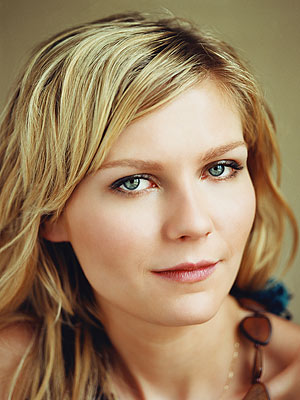
Elizabeth Olsen is so pretty. And so damned talented. Meeting her in person, and having those two attributes collide, makes one feel a bit off-kilter. And also thrilled.
Read my piece on Elizabeth Olsen, whom I adore, now online at Slant Magazine. CLICK HERE.
Showing posts with label actresses. Show all posts
Friday, March 9, 2012
Thursday, February 16, 2012
Oscar Predictions: Acting and Directing
For South Philly Review, I'm predicting the winners in Oscar's Acting and Directing categories. Some of these races are sewn up as tight as a corset, while others will be neck-in-neck right up to the big night.
Next week I'll take a closer look at the Best Picture lineup, but for now, see who I chose to take home the other major stauettes. It's all online at SouthPhillyReview.com. CLICK HERE.
*And please, do check out the great work we've been doing over at The House Next Door, predicting the winners in every single Oscar category. I'm happy to be pitching in alongsode Ed Gonzalez and Eric Henderson, whose punchy commentary is some of the best on the internet.
Next week I'll take a closer look at the Best Picture lineup, but for now, see who I chose to take home the other major stauettes. It's all online at SouthPhillyReview.com. CLICK HERE.
*And please, do check out the great work we've been doing over at The House Next Door, predicting the winners in every single Oscar category. I'm happy to be pitching in alongsode Ed Gonzalez and Eric Henderson, whose punchy commentary is some of the best on the internet.
Monday, January 23, 2012
Oscar 2012: Nomination Predictions
This year, my official Oscar nomination predictions (in select categories) have been published over at Slant Magazine's The House Next Door, where I've been giddily serving as Managing Editor since October. I wish I could tell you I feel rock-solid about all my predictions, but alas, 2011 is the freaking craziest year ever for the Oscars. Nonetheless, a lot of passion and punditry went into these posts, and I should hope they all make for fun reads. Below are links to the categories I covered. While over there, I suggest you poke around and take a peek at the fields assessed by my colleague, Eric Henderson. Man knows his stuff, and can turn a helluva snarky phrase:
BEST COSTUME DESIGN
BEST MAKEUP
BEST CINEMATOGRAPHY
BEST EDITING
BEST SUPPORTING ACTOR
BEST SUPPORTING ACTRESS
BEST DIRECTOR
BEST ACTRESS
BEST ORIGINAL SCREENPLAY
BEST PICTURE
Labels:
actresses,
awards,
Features,
Oscars,
predictions,
slant magazine,
the house next door
Tuesday, December 27, 2011
Meryl Streep Essay: Acting, Politics with Oscar's Queen
For Fandor's Keyframe blog, I was happy to write a piece on none other than Meryl Streep, and two films that give you a rare glimpse into her actorly process: "The Iron Lady," coming soon to theaters, and "Theater of War," a 2008 doc about Meryl's role in the NYC production of "Mother Courage."
To read the article, now online at Fandor's Keyframe, CLICK HERE.
Labels:
actresses,
Essays,
fandor,
Features,
guesting,
keyframe,
Meryl Streep,
politics,
the iron lady,
theater,
theater of war,
tony kushner
Tuesday, November 29, 2011
'My Week with Marilyn' Review
A little late in posting this. Such is the peril of going away for Thanksgiving. I'm in crazy, stupid love with Michelle Williams, and her Marilyn is ace, but this movie is otherwise quite a joke.
Read my full review of "My Week with Marilyn," now online at SouthPhillyReview.com. CLICK HERE.
Thursday, November 3, 2011
Kirsten Dunst Interview
This article was previously published in the November 2011 issue of ICON Magazine. It has been republished with permission.
The Upside of Apocalypse
In the new Lars von Trier film Melancholia, Kirsten Dunst plays a deeply depressed bride who welcomes the destruction of the planet. But in Dunst's own world, things have never been better.
By R. Kurt Osenlund
BETWEEN SMALL SIPS OF GRAPEFRUIT juice, Kirsten Dunst keeps giggling. It's morning at the Crosby Street Hotel in SoHo, and the 29-year-old actress, who's been lending her smirky, all-American looks to movies since the age of seven, is still reeling from the night before, when she and True Blood hunk Alexander Skarsgård, her onscreen fiancé in the new Lars von Trier mind-rattler Melancholia, finally blew off some steam amidst a nonstop press tour for the film.
“We celebrated,” Dunst says, her playful laugh and expression making it especially hard to believe that 17 years have passed since she played the youngest March sister in Little Women. “It was the first time we had a chance to celebrate.”
She may not have much time for it, but Dunst – or “Kiki,” to her fans – certainly has cause for celebration these days. In addition to winning her the Best Actress award at this year's Cannes Film Festival, her performance in Melancholia is earning her the greatest praise of her career and putting her on the short list of contenders for this year's lead actress Oscar. In the movie, which makes no bones about its ending (the world is spectacularly, unapologetically obliterated), Dunst plays Justine, a deeply depressed bride who strains to feign happiness at the start of the film, and whose name, one can only assume, is a nod to the Marquis de Sade's doomed and tortured rebel heroine.
Such is perfectly appropriate, considering that von Trier has gained a reputation for casting actresses in roles of near-sadistic turmoil, from Emily Watson in Breaking the Waves to Charlotte Gainsbourg in 2009's Antichrist. In Melancholia, Gainsbourg stars opposite Dunst as Justine's relatively level-headed sister, Claire. The two actresses chatted about their director while doing the rounds at Cannes (where, two years ago, Gainsbourg also picked up a Best Actress prize for serving as von Trier's muse), and Dunst says she initially sought advice from her Spider Man-3 co-star Bryce Dallas Howard, who in 2005 got in front of von Trier's camera for Manderlay. To the certain disappointment of sensationalist rags, the consensus seems to be that working for von Trier is by no means torturous, but rather liberating and, by all evidence, rewarding.
“I was completely drawn in by Lars,” Dunst says. “I really love his films. I'm always drawn to directors first, and he's one of the great auteurs of our time. He's also one of the only ones writing roles like this for women. It's just an opportunity that doesn't come along very often for anyone.”
Dunst would know. After more than two successful decades in the business, she certainly doesn't have much reason to complain, but like most American actresses, highs like Spider-Man and Marie Antoinette and Eternal Sunshine of the Spotless Mind are punctuated by lows like Elizabethtown and The Crow: Salvation and How to Lose Friends and Alienate People. She's right: there just isn't a flood of compelling roles out there. But Melancholia presents a meaty and challenging one, requiring the conviction to handle a mercurial rollercoaster that includes chirpy denial, profound discomfort, debilitating sadness, eerie aloofness, nudity, sex, and grace under the ultimate pressure— impending annihilation.
It's no secret that von Trier has been battling his own depression, and that it's manifested in his work, from the crushingly troublesome mood evoked by Antichrist to the titular destructive planet in Melancholia, which, as it heads inexorably toward our comparatively puny orb, represents Justine's heavy, ever-encroaching blues. Through the course of the movie, which is quite deliberately split in two, Dunst is tasked with convincing you of Justine's emotional shift, from an ill-behaving and nearly catatonic bride (she systematically ruins her wedding before descending into a state in which she can't eat or bathe) to a woman who finds a strange comfort in imminent doom, holding it together while everyone and everything around her falls apart.
“We talked about it, Lars and I,” Dunst says of Justine's curious arc. “We talked about how, sometimes, when people are depressed, the most horrendous things make them kind of step up to take care of everyone more than anyone else. There could be a lot of reasons for it, but it seems that, when you're in a depressed state, having something really bad happen gives you a kind of life again.”
She doesn't speak much about it, but Dunst suffered from a depression of her own in 2008, shortly after the Spider-Man trilogy closed on a sour note and shortly before Hollywood saw the first year-long drought of Dunst releases since 1992. Reportedly claiming to have felt abysmal for roughly six months beforehand, Dunst checked herself into a Utah facility for treatment. Upon completion, she went on to star in All Good Things, a fact-based New York thriller that, prior to Melancholia, earned her “best ever” raves. Call it the Von Trier Syndrome – depression leading to creative awakening. Her experience certainly informed the way she approached Justine, and her full emergence from it, she says, made tackling the role possible.
“I feel like, to play somebody like this, you have to be in a really good place,” she says, “because you can't play depressed when you're depressed—you can't do anything. There are many who know what that feels like. I think most people have gone through their own version of depression. It's a very normal thing.”
“Normal,” however, isn't the way anyone is going to describe the experience of Melancholia, an extravagantly visceral titan of a movie that, like most all of von Trier's work, is unshakable to the extent that you might want to clear your post-screening schedule. Regardless of how one feels about the apocalypse (whether you'd greet it with an atheistic calm like Justine, or a terrifyingly frantic desperation like Claire), von Trier uses his singular intuition and formidable visual and aural skills to dig right under the skin, penetrating your surface as he presents the smashing of the Earth's crust.
Dunst proves instrumental in her director's artistic goals, nailing that challenge of embodying an antiheroine whose inner life defies typical development. The true strangeness of it all is that, in discussing the role, Dunst never gets more than a touch serious, maintaining a steady levity that comes as a bit of a shock given the character and material in question. Something suggests that out of the actress's emotional lows has emerged an invigorated, and yet, selectively objective, artist, one who knows when to keep seriousness at arm's length and when to her hurl herself headlong into demanding, provocative work. Which, thankfully, seems to be a new habit.
“Whatever this film would have been – a fun experience, a weird experience, whatever – I was ready to do it,” she says. “I'm up for an adventure.”
***
The Upside of Apocalypse
In the new Lars von Trier film Melancholia, Kirsten Dunst plays a deeply depressed bride who welcomes the destruction of the planet. But in Dunst's own world, things have never been better.
By R. Kurt Osenlund
BETWEEN SMALL SIPS OF GRAPEFRUIT juice, Kirsten Dunst keeps giggling. It's morning at the Crosby Street Hotel in SoHo, and the 29-year-old actress, who's been lending her smirky, all-American looks to movies since the age of seven, is still reeling from the night before, when she and True Blood hunk Alexander Skarsgård, her onscreen fiancé in the new Lars von Trier mind-rattler Melancholia, finally blew off some steam amidst a nonstop press tour for the film.
“We celebrated,” Dunst says, her playful laugh and expression making it especially hard to believe that 17 years have passed since she played the youngest March sister in Little Women. “It was the first time we had a chance to celebrate.”
She may not have much time for it, but Dunst – or “Kiki,” to her fans – certainly has cause for celebration these days. In addition to winning her the Best Actress award at this year's Cannes Film Festival, her performance in Melancholia is earning her the greatest praise of her career and putting her on the short list of contenders for this year's lead actress Oscar. In the movie, which makes no bones about its ending (the world is spectacularly, unapologetically obliterated), Dunst plays Justine, a deeply depressed bride who strains to feign happiness at the start of the film, and whose name, one can only assume, is a nod to the Marquis de Sade's doomed and tortured rebel heroine.
Such is perfectly appropriate, considering that von Trier has gained a reputation for casting actresses in roles of near-sadistic turmoil, from Emily Watson in Breaking the Waves to Charlotte Gainsbourg in 2009's Antichrist. In Melancholia, Gainsbourg stars opposite Dunst as Justine's relatively level-headed sister, Claire. The two actresses chatted about their director while doing the rounds at Cannes (where, two years ago, Gainsbourg also picked up a Best Actress prize for serving as von Trier's muse), and Dunst says she initially sought advice from her Spider Man-3 co-star Bryce Dallas Howard, who in 2005 got in front of von Trier's camera for Manderlay. To the certain disappointment of sensationalist rags, the consensus seems to be that working for von Trier is by no means torturous, but rather liberating and, by all evidence, rewarding.
“I was completely drawn in by Lars,” Dunst says. “I really love his films. I'm always drawn to directors first, and he's one of the great auteurs of our time. He's also one of the only ones writing roles like this for women. It's just an opportunity that doesn't come along very often for anyone.”
Dunst would know. After more than two successful decades in the business, she certainly doesn't have much reason to complain, but like most American actresses, highs like Spider-Man and Marie Antoinette and Eternal Sunshine of the Spotless Mind are punctuated by lows like Elizabethtown and The Crow: Salvation and How to Lose Friends and Alienate People. She's right: there just isn't a flood of compelling roles out there. But Melancholia presents a meaty and challenging one, requiring the conviction to handle a mercurial rollercoaster that includes chirpy denial, profound discomfort, debilitating sadness, eerie aloofness, nudity, sex, and grace under the ultimate pressure— impending annihilation.
It's no secret that von Trier has been battling his own depression, and that it's manifested in his work, from the crushingly troublesome mood evoked by Antichrist to the titular destructive planet in Melancholia, which, as it heads inexorably toward our comparatively puny orb, represents Justine's heavy, ever-encroaching blues. Through the course of the movie, which is quite deliberately split in two, Dunst is tasked with convincing you of Justine's emotional shift, from an ill-behaving and nearly catatonic bride (she systematically ruins her wedding before descending into a state in which she can't eat or bathe) to a woman who finds a strange comfort in imminent doom, holding it together while everyone and everything around her falls apart.
“We talked about it, Lars and I,” Dunst says of Justine's curious arc. “We talked about how, sometimes, when people are depressed, the most horrendous things make them kind of step up to take care of everyone more than anyone else. There could be a lot of reasons for it, but it seems that, when you're in a depressed state, having something really bad happen gives you a kind of life again.”
She doesn't speak much about it, but Dunst suffered from a depression of her own in 2008, shortly after the Spider-Man trilogy closed on a sour note and shortly before Hollywood saw the first year-long drought of Dunst releases since 1992. Reportedly claiming to have felt abysmal for roughly six months beforehand, Dunst checked herself into a Utah facility for treatment. Upon completion, she went on to star in All Good Things, a fact-based New York thriller that, prior to Melancholia, earned her “best ever” raves. Call it the Von Trier Syndrome – depression leading to creative awakening. Her experience certainly informed the way she approached Justine, and her full emergence from it, she says, made tackling the role possible.
“I feel like, to play somebody like this, you have to be in a really good place,” she says, “because you can't play depressed when you're depressed—you can't do anything. There are many who know what that feels like. I think most people have gone through their own version of depression. It's a very normal thing.”
“Normal,” however, isn't the way anyone is going to describe the experience of Melancholia, an extravagantly visceral titan of a movie that, like most all of von Trier's work, is unshakable to the extent that you might want to clear your post-screening schedule. Regardless of how one feels about the apocalypse (whether you'd greet it with an atheistic calm like Justine, or a terrifyingly frantic desperation like Claire), von Trier uses his singular intuition and formidable visual and aural skills to dig right under the skin, penetrating your surface as he presents the smashing of the Earth's crust.
Dunst proves instrumental in her director's artistic goals, nailing that challenge of embodying an antiheroine whose inner life defies typical development. The true strangeness of it all is that, in discussing the role, Dunst never gets more than a touch serious, maintaining a steady levity that comes as a bit of a shock given the character and material in question. Something suggests that out of the actress's emotional lows has emerged an invigorated, and yet, selectively objective, artist, one who knows when to keep seriousness at arm's length and when to her hurl herself headlong into demanding, provocative work. Which, thankfully, seems to be a new habit.
“Whatever this film would have been – a fun experience, a weird experience, whatever – I was ready to do it,” she says. “I'm up for an adventure.”
***
Friday, August 26, 2011
Tilda Swinton: Cinema's Cyborg
My first piece for Keyframe, the official blog of Fandor.com, is an essay on Tilda Swinton and her cyborgian greatness, best exhibited in Lynn Hershman Leeson's "Teknolust."
CLICK HERE for the article!
Labels:
actresses,
Essays,
fandor,
Features,
keyframe,
lynn hershman leeson,
teknolust,
tilda swinton
Sunday, May 1, 2011
Eva Green Interview
This article was published in the May 2011 issue of ICON magazine. It has been re-published with permission.
The Good Witch
Currently starring in the arthouse drama Cracks and the TV series Camelot, actress Eva Green says she has ambitions to soar beyond the dangerous, mysterious roles that have become her trademark. Too bad she’s so bloody good at playing them.
By R. Kurt Osenlund
IF EVA GREEN HAD HER WAY, she’d be starring in a remake of Mata Hari, the 1931 espionage drama that saw Greta Garbo don the bejeweled headdresses of the titular dancing spy. The larger-than-life character is the one 30-year-old Green says she’s most desperate to play, which, of course, couldn’t make more sense.
“I think it’s always interesting for a character to have a secret,” Green says in a recent phone interview, the poor connection no match for the rich timbre of her distinctive voice. “Something dark for the audience to discover.”
“Dark” and “secret” are words that spring to mind just from looking at this French actress, her ambiguous pout and smoky-eyed stare as unnerving as they are sexy. Over the past decade, Green has portrayed a witch in The Golden Compass, a princess capable of murdering her own son in Kingdom of Heaven, and the enigmatic double agent and Bond girl Vesper Lynd in Casino Royale (“It made me famous,” Green says of the latter).
But femme fatale archetypes, Green insists, aren’t the only characters she’s after, nor is fame a primary pursuit. Her upcoming films include the German-made cloning drama Womb and the Sundance selection Perfect Sense, two little-known projects in which she plays a “nerdy, shy character” and a “normal character,” respectively. She can currently be seen in Cracks, a boarding-school period piece from Jordan Scott, daughter of Green’s Kingdom of Heaven director, the great Ridley Scott. While she certainly meets Green’s criteria of dark and secretive, Green’s character, an ostensibly id-driven English swimming instructor known only as Miss G., doesn’t wield any literal weapons or ensnare men. She does, however, bewitch the bevy of teenage girls who idolize her, and are entranced by her feminist impulses, her wild stories and her worldview, which bucks the norms of the film’s 1930s setting (smoking and preaching the supreme merit of “desire!” she’s like Mona Lisa Smile’s whore cousin).
“We wanted her to look very much like a movie star,” Green says, “Marlene Dietrich, Bette Davis. I imagine that Miss G. is sewing during the night—everything has to look perfect.”
“It’s difficult to find good, multi-faceted roles in movies for women,” she says. “I need to fall in love with the character. I cannot just do something for the sake of it or for the money, otherwise I think I’d die. I have to fall in love with it. I’m picky—too picky, probably.”
Green’s discriminating instincts haven’t exactly steered her wrong. Along with a perceptive mentor and a whole lot of nerve, she has them to thank for her breakthrough. In 2002, when Green was discovered by Italian provocateur Bernardo Bertolucci and offered a major role in his forthcoming film The Dreamers, she was urged by her family and entourage to decline. The 2003 movie, which co-stars Louis Garrel and Michael Pitt and shows a whole lot of skin, didn’t scream “wise career move” to Green’s camp. But Green ignored the warnings, having long been a fan of Bertolucci’s controversial classic Last Tango in Paris. The Dreamers, a daringly beautiful film (which, incidentally, features Green doing Garbo while play-acting scenes from Queen Christina), became an arthouse and critical success, and it gave Green a helluva first experience as a bigscreen actress.
Though she doesn’t say it, it’s fair to assume Green hasn’t met such disappointment, nor has her career gone the way of recently-deceased Last Tango star Maria Schneider, who never truly regained the attention that, for better or worse, her baring-all breakout brought her. Green, who cites French luminary Isabelle Adjani as her childhood icon and actorly inspiration, has starred opposite Nicole Kidman, Orlando Bloom, Daniel Graig, Judi Dench, Jeremy Irons, Romain Duris, Edward Norton, Kristin Scott Thomas and Ewan McGregor. As is the case with Cracks, it’s not uncommon for her to be the most indelible player of the movie in which she appears.
Yes, the femme fatale. Despite her best efforts to deflect it, and despite a clear capacity for dramatic range (The Dreamers, which may still boast Green’s best performance, is, for a large chunk, lighhearted), the femme fatale thing has a way of hovering over Green, not like a dark cloud, but, perhaps, a dark halo. Her other current role is in Camelot, the Starz TV series based on Arthurian legend. She plays Morgan le Fay, Arthur’s cunning sorceress of a half-sister who battles him for the throne. Morgan—or Morgana, as she’s often called—is right up there with Mata Hari in the rogues’ gallery of cultural and historical vamps. It might be somewhat unconscious, it might be partly due to forces “not from this world,” but Green sure seems to have cornered a market.Which, box or no box, is not to be undervalued—there’s something to be said of an actress who knows just how to play to her considerable strengths.
The Good Witch
Currently starring in the arthouse drama Cracks and the TV series Camelot, actress Eva Green says she has ambitions to soar beyond the dangerous, mysterious roles that have become her trademark. Too bad she’s so bloody good at playing them.
By R. Kurt Osenlund
IF EVA GREEN HAD HER WAY, she’d be starring in a remake of Mata Hari, the 1931 espionage drama that saw Greta Garbo don the bejeweled headdresses of the titular dancing spy. The larger-than-life character is the one 30-year-old Green says she’s most desperate to play, which, of course, couldn’t make more sense.
Widely regarded as the 20th century’s foremost femme fatale, Mata Hari, who in 1917 was executed for allegedly spying for Germany during World War I, would prove the ultimate conquest for Green, whose relatively short filmography is already brimming with vamps and vixens to be reckoned with.
“I think it’s always interesting for a character to have a secret,” Green says in a recent phone interview, the poor connection no match for the rich timbre of her distinctive voice. “Something dark for the audience to discover.”
“Dark” and “secret” are words that spring to mind just from looking at this French actress, her ambiguous pout and smoky-eyed stare as unnerving as they are sexy. Over the past decade, Green has portrayed a witch in The Golden Compass, a princess capable of murdering her own son in Kingdom of Heaven, and the enigmatic double agent and Bond girl Vesper Lynd in Casino Royale (“It made me famous,” Green says of the latter).
![]() |
| Green with Daniel Craig in "Casino Royale" |
“Don’t think; do!” Miss G. tells her captivated pupils, whose social hierarchy is dependent upon who can best fill the role of teacher’s pet. But is Miss G. as free-spirited and forward-minded as she seems? Green, who in her own life is more thinker than doer (“I should cut off my head sometimes in order to get things done,” she says), had a blast constructing, then deconstructing, her complicated screen persona, who’s surely the main attraction, if not quite the main character. Known for her bold fashion sense and occasional modeling gigs (Emporio Armani, Dior), Green worked closely with costume designer Alison Byrne to develop a look for Miss G., whose flowing frocks and glamorous headbands and hairstyles evoke film actresses of the era.
![]() |
| Green as the mysterious Miss G. |
But, naturally, everything is not perfect, and as the mystique of Miss G. unravels, her wardrobe does, too. Jewelry, tailored jackets and finger waves give way to frumpy housecoats, unkempt coifs and no makeup. It comes as no surprise that Green reveled in the character’s downward spiral, digging into the aesthetic and dramatic opportunities of a classic movie breakdown. But the arc of Miss G. is what appealed to the actress
most—the chance to embody a strange woman with a wide, metamorphic range of “colors,” a word Green drops a lot when discussing the parts she chooses.
“It’s difficult to find good, multi-faceted roles in movies for women,” she says. “I need to fall in love with the character. I cannot just do something for the sake of it or for the money, otherwise I think I’d die. I have to fall in love with it. I’m picky—too picky, probably.”
![]() |
| Green in "The Dreamers" |
“I had to pinch myself every day, like, ‘Oh my god, I’m in a Bertolucci movie,’” Green says. “We used to go to his house every weekend and he’d talk about the cinema and music and art. It was just amazing. It was a great start, for sure, to work with Bertolucci. It was hard, though, because when you start with somebody so great, you think you’ll be disappointed after that.”
![]() |
| Green with her "Cracks" costars, including Juno Temple and Imogen Poots |
Born to a French mother and Swedish father and raised partially in London, Green has an alluringly odd, uniquely exotic appeal, which undoubtedly affects the sorts of scripts she’s offered. Is it a help or a hindrance for an actor to have a trademark package of characteristics that inevitably paints a specific picture in the minds of filmmakers and casting directors? Green seems torn on the question. She’s aware that she’s sometimes perceived as being “mysterious” and “not from this world” (“It’s kind of true,” she laughs), but she also doesn’t want to be pigeonholed, or “put in the femme fatale box.”
![]() |
| Green in TV's "Camelot" |
Green’s next big project is Dark Shadows, Tim Burton’s much-anticipated adaptation of the 1960s-era gothic soap opera. Starring alongside Burton muse Johnny Depp, and among a cast of characters that includes zombies, ghosts and vampires, Green plays Angelique Bouchard, a villainess who practices witchcraft.
“She’s kind of dark,” Green says with a laugh and a light, submissive sigh. “So, here we go again.”
***Wednesday, November 10, 2010
THR's Actress Buffet
I'm way behind the eightball on this, but I didn't want to just proceed as if The Hollywood Reporter's delicious roundtable with six major actresses didn't happen. You can watch clips of the full hour-long interview at THR's Web site (and by god, don't interrupt the feed -- you'll be forced to start over!). For now, enjoy the exceedingly monochromatic cover:
If you don't have the patience to watch the whole video (trust me, it's addictive), Nathaniel Rogers live blogged it last week over at The Film Experience.
Subscribe to:
Posts (Atom)